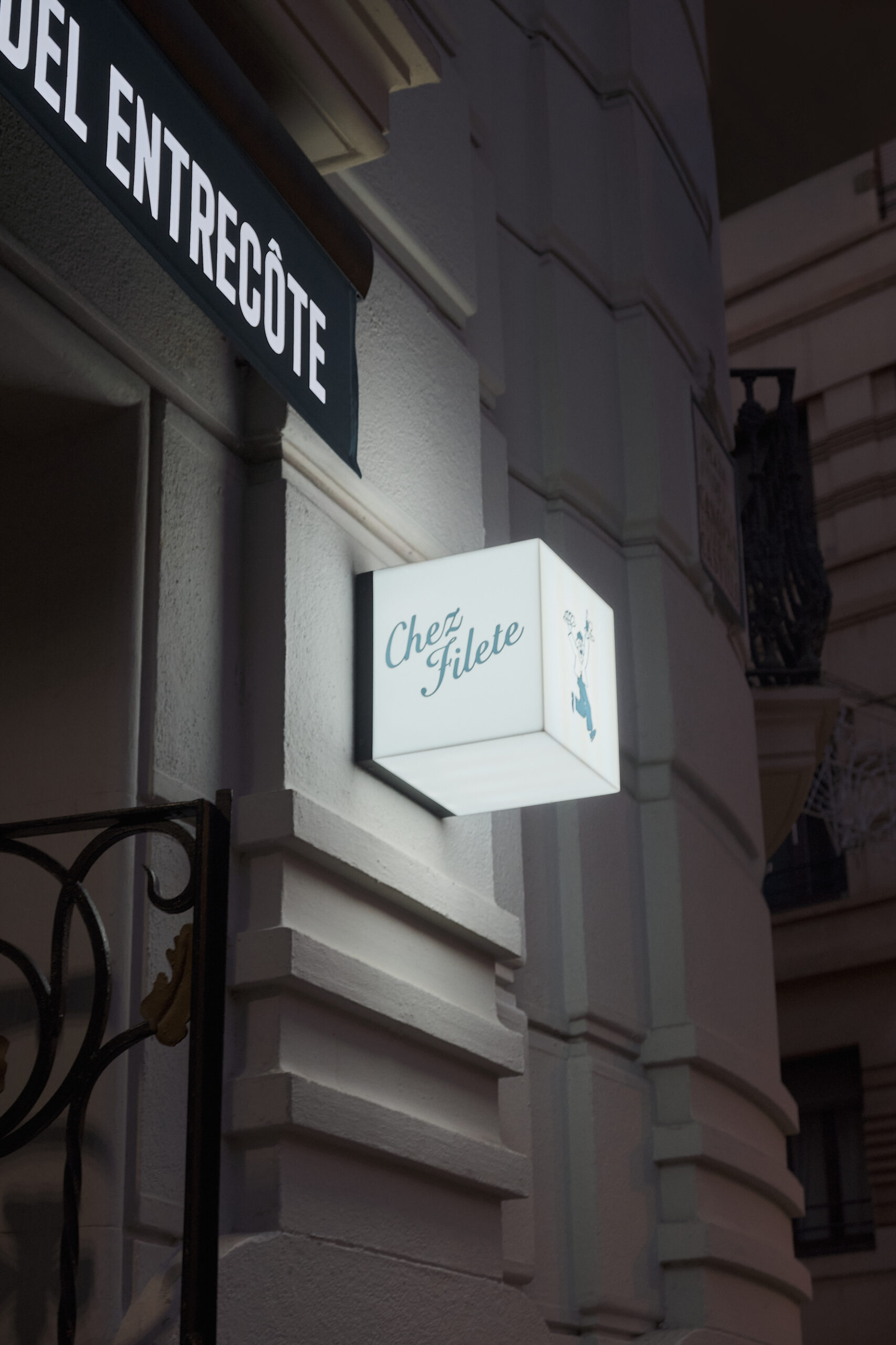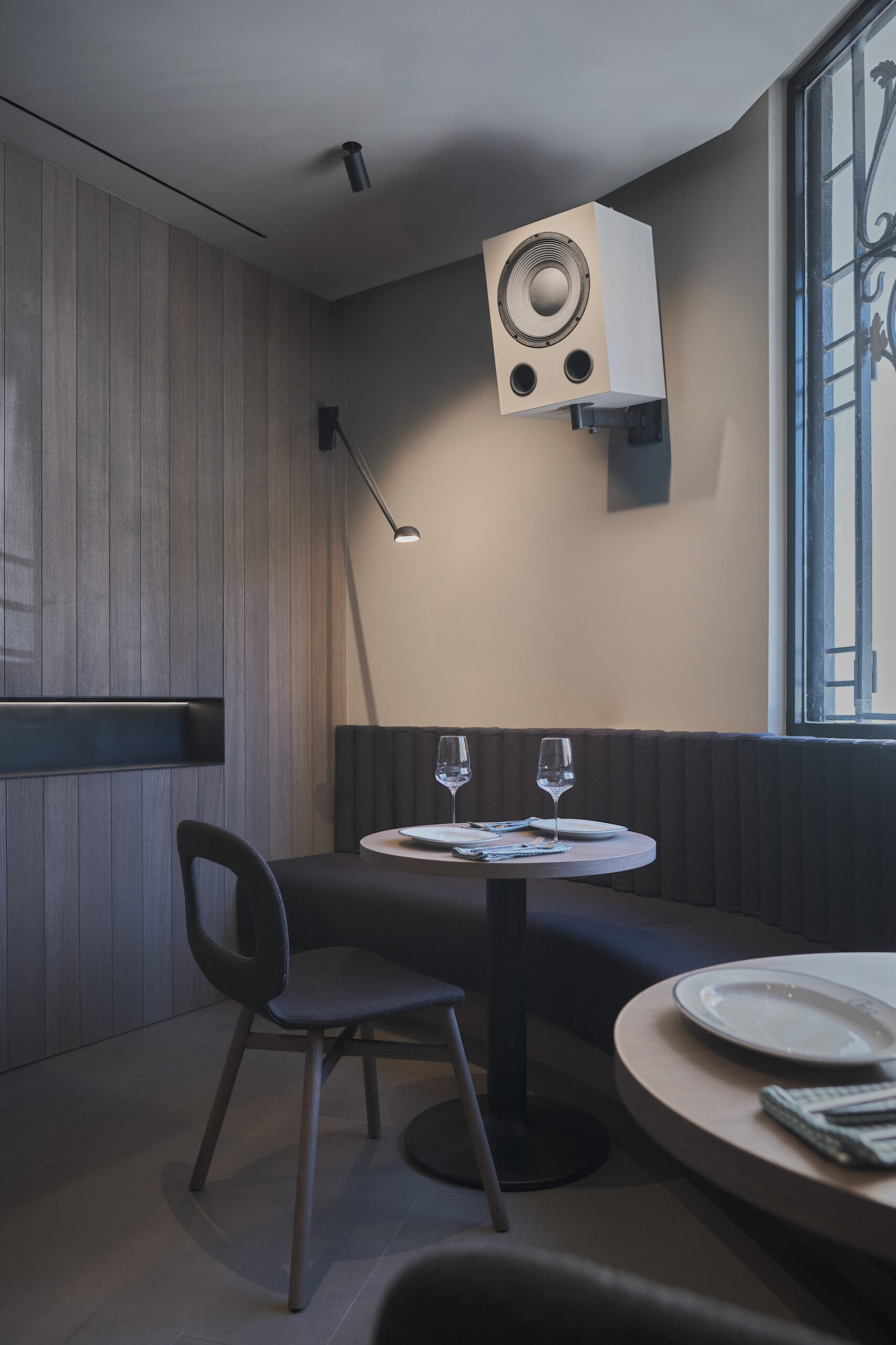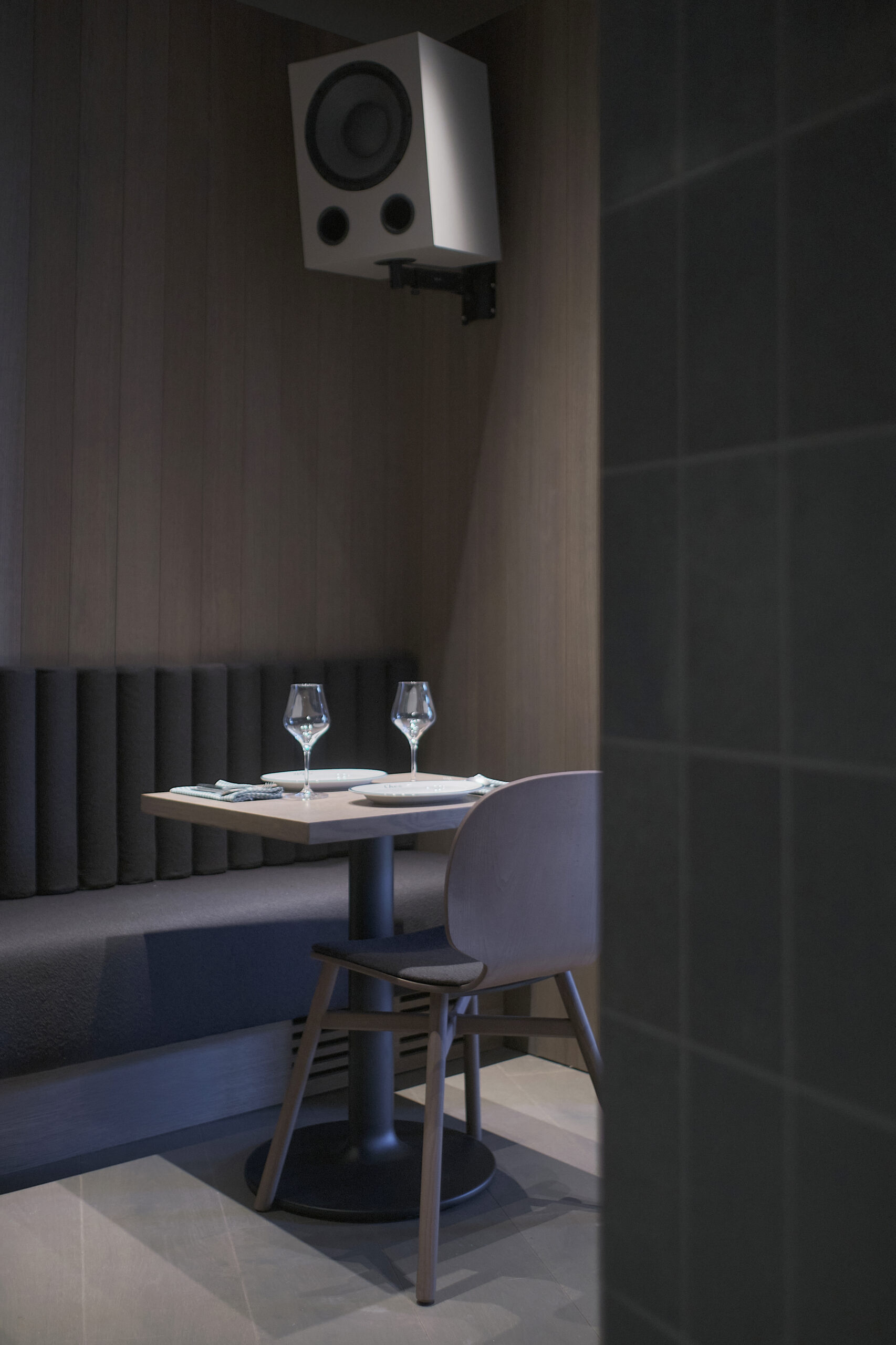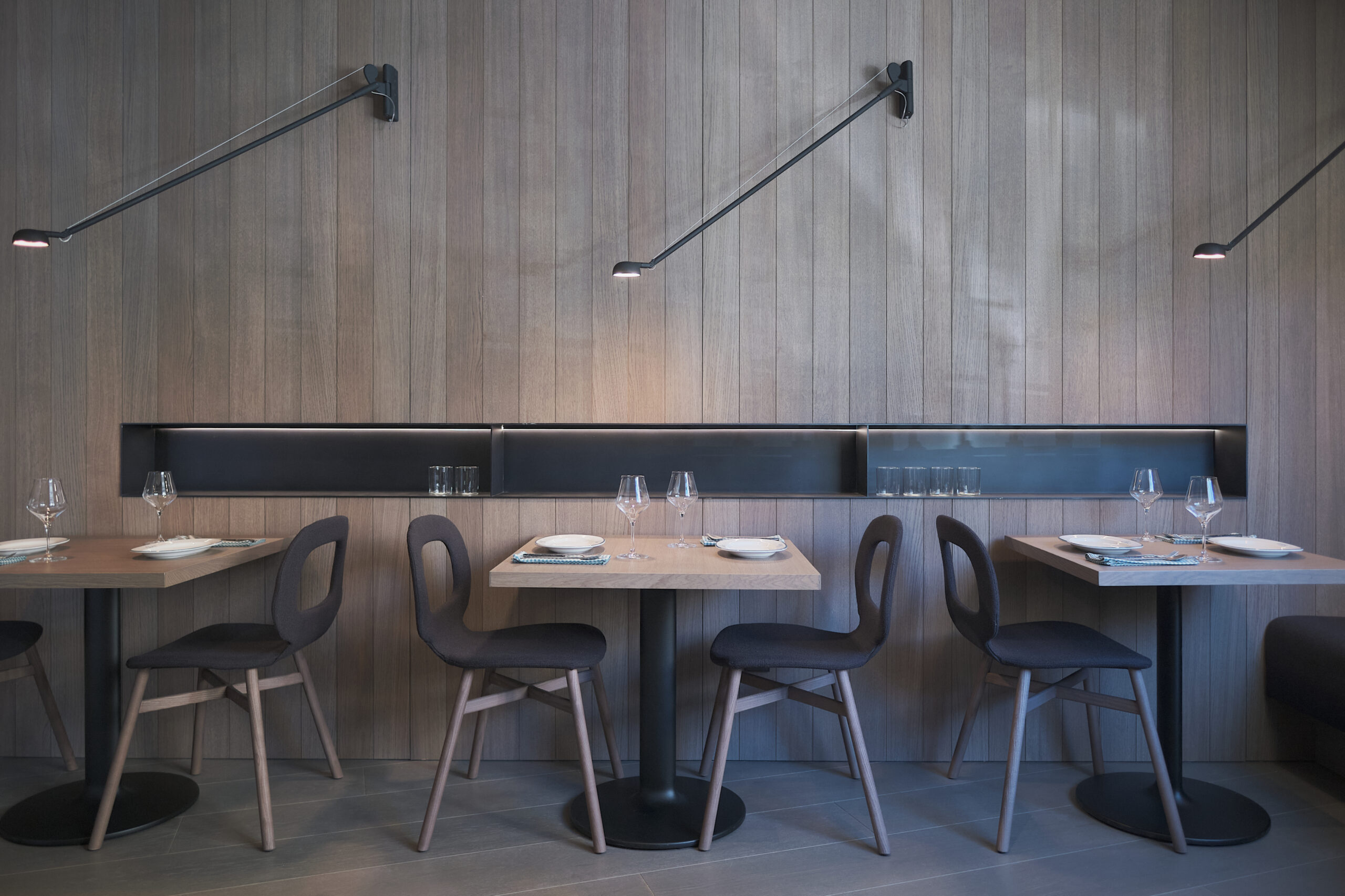
At Plaza de Cánovas 1, Chez Filete occupies the ground floor of a Valencian Modernista building with an apparently simple idea: do less, but do it with absolute precision. The project, developed by Francesc Rifé Studio, turns that reduction into spatial language, taking the logic of a restaurant built around a single dish and applying it to an interior architecture that is restrained, warm and perfectly measured. We spoke with the studio about how a compact, urban space, very aware of its role in València’s new food scene, took shape.
1. How did the Chez Filete project come to the studio, and what was the main challenge in shaping the space?
The project came through Pablo Salvo, who wanted to reinterpret the classic L’Entrecôte Café de Paris model and bring it to València from a more contemporary perspective. More than replicating a format, he wanted to build a very defined experience around a single dish. From the start we understood that if the kitchen was betting on synthesis, the space had to do the same.
2. What role does design play in Chez Filete’s identity and in the experience guests have inside the restaurant?
We always say that in a restaurant there are no hierarchies. The light, the materials, the music, the service or the dish itself are equally important. Design should not draw attention, but help everything work naturally.
3. Is there a decision, detail or moment in the process that you remember as especially significant?
Probably the moment we decided to stop seeing the geometry of the space as a limitation. The building has a very particular shape and, instead of correcting it, we preferred to work with it. That is where the curved bench running through the main room comes from, and also the way the bar is organized and its relationship with the kitchen.
4. How does Chez Filete engage with València, and how would you like this project to contribute to the city?
I think València is going through a very nice moment, increasingly open to new ways of understanding food. Chez Filete is an example of that. It shows that a very powerful experience can be built from restraint, doing fewer things but doing them very well.